Posts

Showing posts with the label optics

EP 313 Physics Lab 3 - Optics and Spectroscopy Lab (Autumn 2017-18)

Instructor Name Prof. T. Kundu and Prof. Dinesh Kabra Prerequisites Optics Important Topics Covered As a lab course, it was rooted in experiments for using spectroscopy to find properties of atoms and molecules as well as the working of a few optical setups.   Assignments Only experiments.   Exams and Grading A quiz and a lab practical exam along with in-lab experimental sessions. Respondent Basuhi R. Note: This is a review to help you make a more informed choice about how to study for this course and/or choosing this course. While we've tried to keep it objective and complete, one must keep in mind that students have varying interests, methods of study, and the course itself changes from year to year.
EP 226 Waves, Oscillations and Optics (Spring 2016-17)

Instructor Name:  Prof. Tapanendu Kundu Course Type:  Core Pre-requisites:  None Course Content:  Oscillations: Damped Oscillations, Forced Oscillations in both spring mass systems and electrical circuits Waves: Travelling waves, Standing waves (Standing Waves on a string, Cavity Quantisation), Maxwell's Equations, Fourier Transform, Surface Plasmons and Bulk Plasmons Optics: Polarisation, Fresnel Equations, Waveguides Books:  (For Waves and Oscillations) Berkeley Physics Course Vol 3 (by Frank S. Crawford) (For Optics) K.K. Sharma Optics, Eugene Hecht Lectures:  The Prof did not use slides at all. Everything was taught on the board. A lot of experiments were demonstrated in lectures.  Attendance was taken everyday. The lectures were comprehensive enough, but on some very rare occasions, the derivations were a little tough to understand. Assignments:  No assignments were given for the course. There were two tutorials given as...

EP 226 Oscillations, Waves and Optics (Spring 2017-18)

Instructor Name:  Prof. Tapanendu Kundu Course Type:  Core Pre-requisites:  PH 108- Use of Maxwell's equations and boundary conditions. Course Content:  SHM Damped oscillations Forced oscillations Coupled oscillations Propagating Waves and Standing waves- Reflection and transmission Surface plasma waves and resonance with the experimental setup Polarisation, Jones vectors Laser phenomena and Construction Books:  KK Sharma for Optics part especially polarization. Lectures:  Prof takes attendance and considers it if a person is on the boundary of two grades. He teaches on blackboard and expects notes to be taken down.  Assignments:  No assignments. Tutorials are given before the 2 exams. They are usually exam level and are not graded. Exams and Grading:  Midsem 30, endsem 50, presentation 20. No quizzes. Pro-Tips:  Pay careful attention in class and note down whatever the prof discusses, even if you feel it is irrelevant...

Max Planck Institute for Nuclear Physics - Harshank Shrotriya

Image
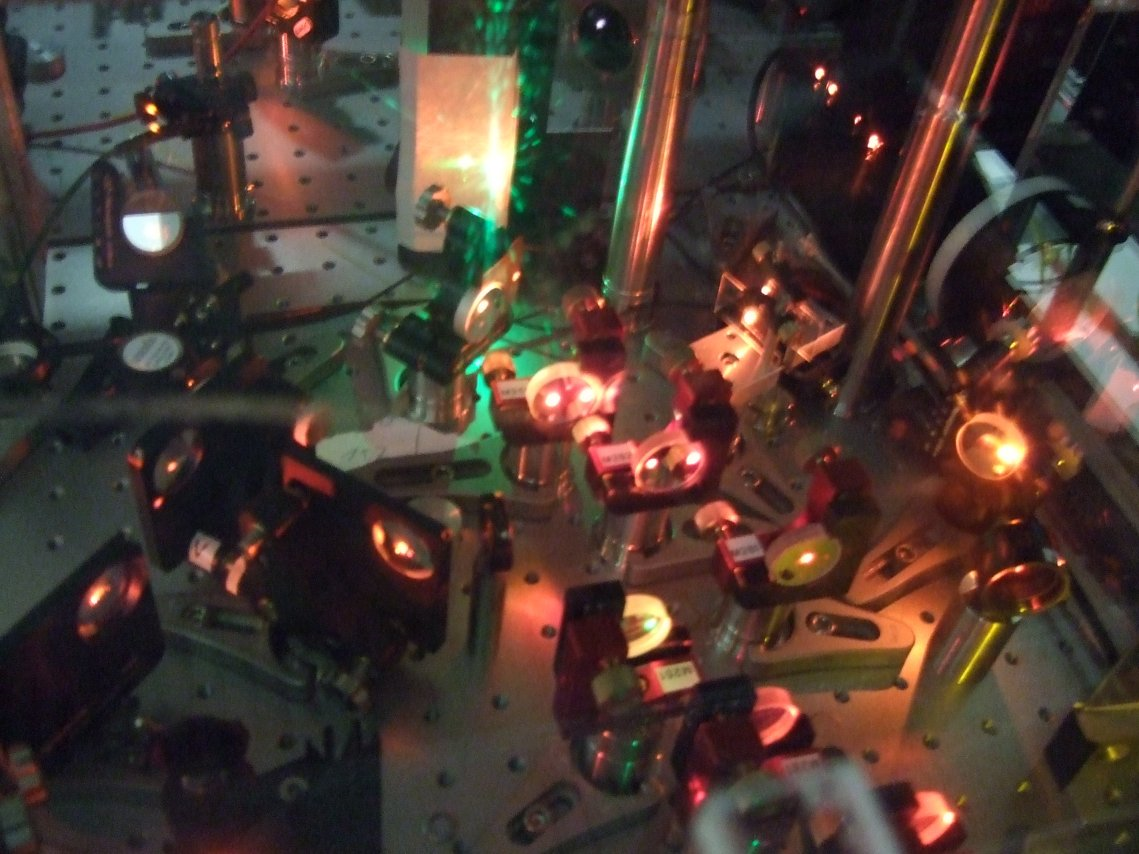
Temporal characterization of Attosecond pulses. Max Planck Institute for Nuclear Physics (MPIK), Heidelberg, Germany. Work I joined the Quantum Dynamics and Control division at MPIK for 10 weeks for my summer internship. Ultrafast optics is useful in studying processes in nature which happen on a very small time scale. With the discovery of High Harmonic Generation it is possible to generate ultrashort Laser pulses with attosecond duration. But these pulses are of no use if they are not characterized before using them to observe other phenomenon (like observing Photoionization time delay). My work dealt with characterizing an attosecond time scale pulse in time domain so as to identify the intensity, phase variation and length (FWHM) of the pulse. For the first few weeks I read about algorithms used to characterize these pulses and discussed them with other PhD students in the group. I was assigned one particular PhD student whom I had already been corresponding with 2 months...

EP 226 - Waves, Oscillations and Optics, Spring 2016-17

Instructor Name  Tapanendu Kundu Course Type Core for EP students Course overview Oscillations : Most of this part is a review of simple harmonic motion. Topics like damped oscillations, forced oscillations, coupled oscillations (in both spring mass systems and electrical circuits) are discussed in a relatively rigorous manner. Fourier series analysis of oscillations is also discussed at length. Waves : The initial part is a recap of JEE physics. Equations and analyses of travelling waves, standing waves are covered. The rest of the topics include physical models for transverse and longitudinal waves, continuum model for string vibration modes, cavity quantisation of electromagnetic waves, Maxwell's equations, use of Fourier transforms. Plasmonics : Introduction to surface plasmon polaritons and bulk plasmons. Attenuated total reflection discussed in the context of specific biomedical engineering applications. Optics :  Polarisation, Jones matrix formalism, pho...